

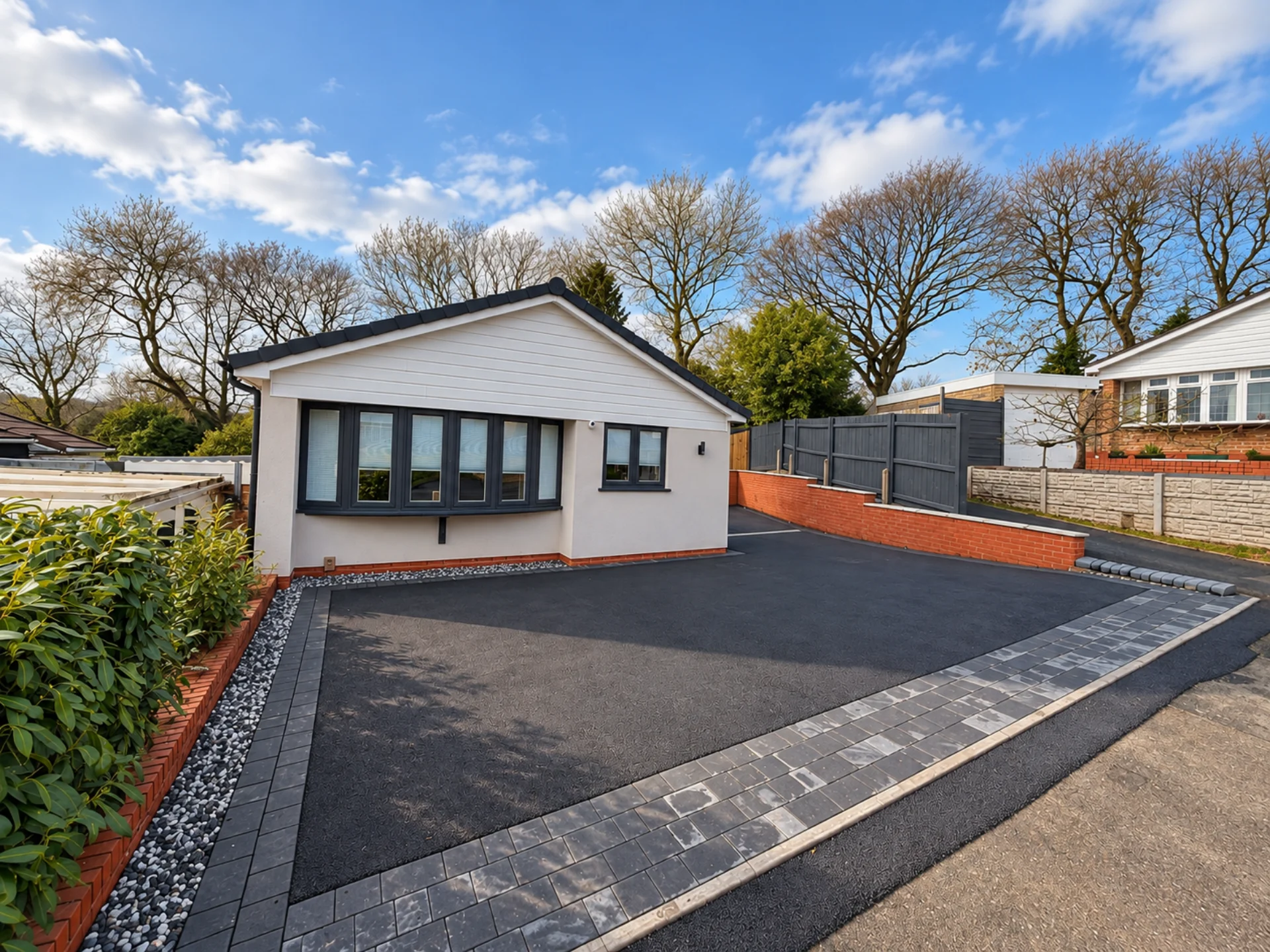
Tarmac has been the workhorse of British driveways for decades, and for good reason. Laid well, it gives you a firm, quiet surface that copes with daily traffic and asks very little of you afterwards. Laid badly, it starts sinking within a couple of years, with weeds pushing up along the edges. Almost all of the difference happens underneath, in layers you never see once the job is finished.
This page explains how a tarmac driveway is built and what affects its lifespan. It also covers how to tell whether your existing drive can be resurfaced or needs taking back to the base. Our own team lays tarmac across Redditch and the surrounding area, and every project starts with a free site visit.
What tarmac actually is
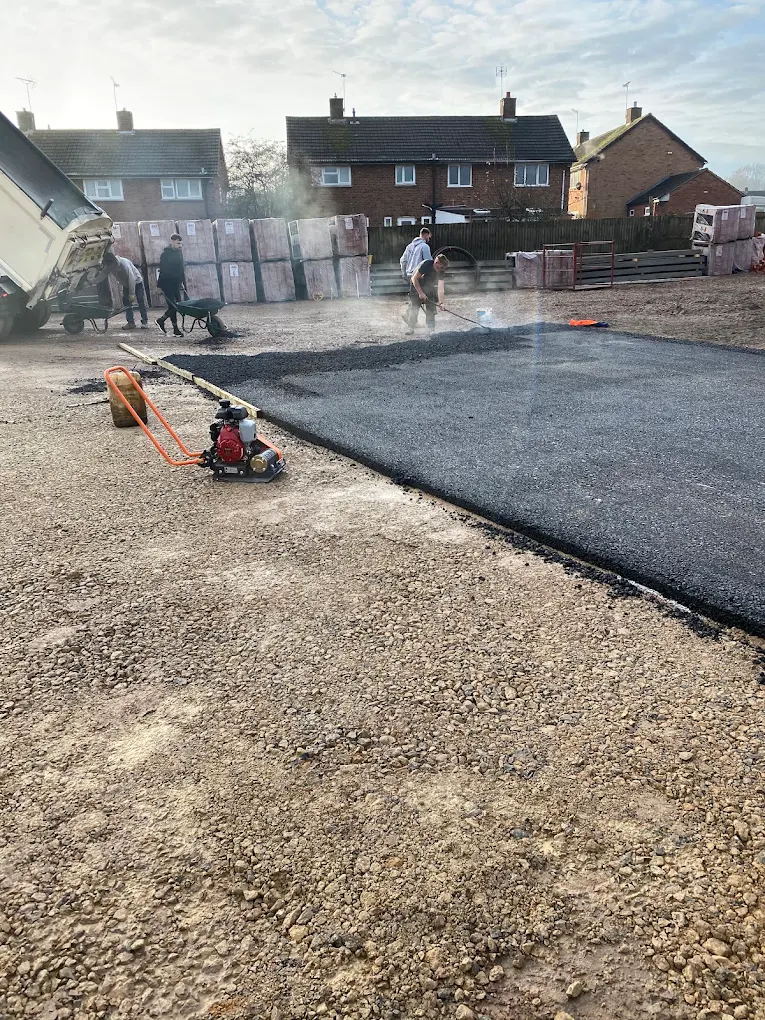
Most people still say tarmac, though modern driveways are laid with asphalt. Traditional tarmacadam used coal tar to bind crushed stone together. Today's material uses bitumen instead, which is stronger and more consistent. It arrives hot and is compacted with a roller while it is still workable.
Once cooled, it forms a continuous sealed surface. That makes it smooth underfoot and easy to sweep. It also means rain runs off rather than soaking through, which is why drainage has to be planned from the start.
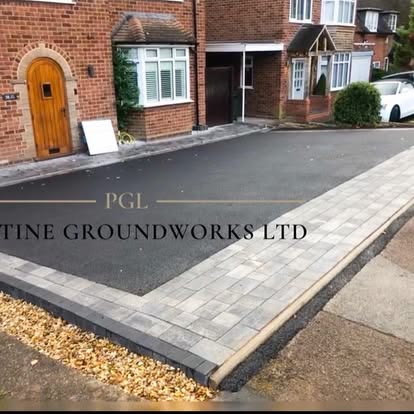
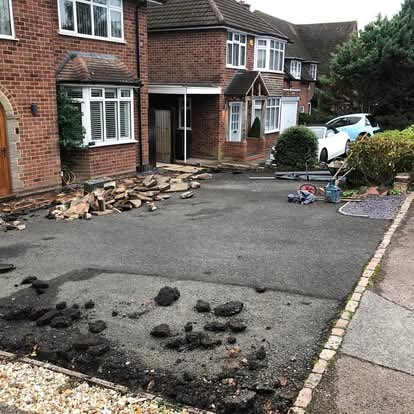
How a tarmac driveway is built
A tarmac drive is a layered system. Each layer has a job, and skimping on any of them shows up later as dips or potholes.
| Layer | Usual material | Typical depth | What it does |
|---|---|---|---|
| Sub base | Crushed stone, compacted in layers | Around 150mm | Spreads the weight of vehicles into the ground |
| Binder course | Coarse asphalt with 20mm stone | Around 50mm | Gives strength and a level platform |
| Surface course | Fine asphalt with 6mm stone | Around 25mm | Provides the smooth, finished surface |
| Edging | Kerbs or block paving | Set in concrete | Stops the edges spreading and crumbling |
Depths vary with the ground and the vehicles using the drive. Soft clay or heavier vehicles call for a deeper sub base, and we decide that on site rather than working from a fixed formula.
Why edging matters so much
Tarmac has no strength at an unsupported edge. Left without a kerb or border, the edges slowly break away under car tyres and the weather. A solid edge restraint, usually kerbs or a row of block paving set in concrete, holds everything in shape. It also gives a neat line between the drive and your lawn or borders.
Our installation process, step by step
- Free site visit. We measure up, check levels and look at where water currently goes, then talk through edging and finish options.
- Excavation. Old surfaces and soft ground are removed to the depth your drive needs, and the spoil is taken away.
- Edging and drainage. Kerbs or block borders are set in concrete. Channel drains or a soakaway go in where water needs managing.
- Sub base. Crushed stone is laid and compacted in stages so it cannot settle later.
- Binder course. Hot asphalt is spread to falls and rolled firm.
- Surface course. A finer layer is laid over the top and rolled to a smooth, tight finish.
- Handover. We tidy up and explain how to treat the new surface over its first few weeks.
New drive or resurfacing?
Resurfacing means laying a fresh wearing course over an existing tarmac drive. It can be a sensible, quicker option, provided the drive underneath is sound. Overlaying a failing base only hides problems for a short time, so the decision comes down to what is going on below.
- Surface looks tired and faded but feels firm everywhere: resurfacing is often fine
- Small, stable cracks with no sinking: resurfacing can work after repairs
- Dips or puddles in the same spots every time it rains: the sub base has moved
- Potholes that keep coming back: water is getting into a weak base
- Concrete underneath: cracks in concrete tend to reflect up through new tarmac
If the first two describe your drive, an overlay may save you money. If any of the last three apply, a full rebuild nearly always lasts far longer.
Common tarmac problems and what causes them
Most driveway failures we see trace back to how the drive was built. Knowing the causes helps you judge any quote, ours included.
| Problem | Usual cause | How a proper build avoids it |
|---|---|---|
| Sinking or rutting | Thin or poorly compacted sub base | Enough depth, compacted in layers |
| Crumbling edges | No edge restraint | Kerbs or blocks set in concrete |
| Standing water | Wrong falls or no drainage | Levels and drainage planned before laying |
| Potholes | Water getting into a weak base | Sealed surface over a solid foundation |
| Weeds along the sides | Gaps at the edges | Tight edging and a membrane where needed |
Tarmac on Redditch ground
Local conditions change how a drive should be built. Redditch has a few that we plan for on almost every job.
Clay that moves with the seasons
Heavy clay is common across Redditch and north Worcestershire. It swells when wet and shrinks in dry summers, and that movement can crack a drive with a shallow base. A deeper, well compacted sub base, plus drainage that stops water collecting underneath, keeps the surface stable through those swings.
Slopes and water running towards the house
Hilly roads in Headless Cross and Webheath produce plenty of drives that slope down towards a garage or front door. Tarmac grips well on a gradient, which makes it a practical choice here. On those drives, a channel drain across the bottom is usually essential, so rainwater is caught before it reaches the house.
Longer drives and rural access
Out in the villages, drives are often longer and see delivery vans or farm traffic. Homes around Inkberrow and Feckenham often have access like this, and tarmac handles it well when the base is built for the extra weight. For busy commuter households in places like Wythall, a wide tarmac drive with room to turn makes daily life simpler.
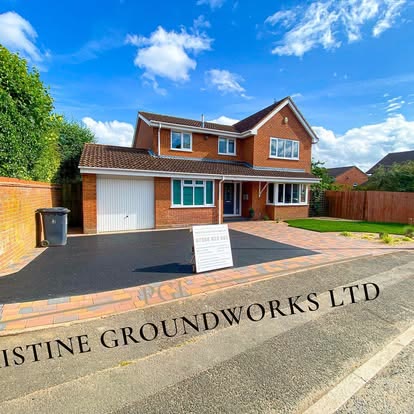
Making tarmac look smarter
Plain black tarmac is practical, though it does not have to look basic. A few details make a big difference to kerb appeal:
- A border of block paving in a colour that suits your brickwork
- Contrasting kerbs or setts to define the edges and any parking bays
- A resin or block paved apron at the entrance
- Red or other coloured asphalt for paths or a defined area
- Neat planting borders alongside the drive
If you want a fully decorative finish, a resin bound driveway or block paving may suit you better. Plenty of homeowners combine materials, using tarmac for the main parking area with a decorative border around it.
Drainage and planning rules
Because tarmac is a sealed surface, the planning rules for front gardens apply. In England, laying more than five square metres of non permeable surface in a front garden needs planning permission, unless rainwater is directed to a permeable area or drainage within your property. Most tarmac drives meet the rule by falling towards a lawn or border, or into a soakaway or channel drain, and we design that in from the start. You can read the government guidance on permeable front gardens for the full detail.
Porous asphalt is also available. It lets water drain straight through and sits on a permeable sub base, which can be useful on frontages where there is nowhere obvious for water to run.
Widening a drive often means a new or longer dropped kerb. That needs approval from the highway authority, which for Redditch is Worcestershire County Council. We can explain how the application works during our visit.
Caring for a new tarmac drive
Fresh asphalt stays slightly soft for its first few weeks, especially in warm weather. A little care during that time prevents marks that are hard to remove later.
- Avoid turning the steering wheel while the car is stationary for the first few weeks
- Keep motorbike stands and trailer jacks off the surface on hot days, or rest them on a board
- Clean up fuel or oil spills quickly, since they soften bitumen
- Sweep regularly so leaves and soil do not build up along the edges
- Deal with any small cracks early, before water can get underneath
Over time the deep black colour fades to a softer grey. That is normal and has no effect on strength. Restoration treatments can darken an older surface if you want it to look fresher.
Other work we can include
Driveway jobs often bring other improvements with them. Alongside the tarmac, we can take care of:
- Kerbs and block paving borders
- Soakaways and channel drains
- Low retaining walls and steps for sloping frontages
- Paths linking the drive to your front or side door
- Front garden tidy ups, including planting beds and turf
Why choose Pristine Groundworks
We are a family run business based on Greenlands Ave in Redditch, with a combined 40 years of hands on experience in the industry. Our own team handles every stage, from digging out to the final roll, so the standard stays consistent from start to finish.
- Free site visits with honest advice on resurfacing versus a full rebuild
- Written 3 year guarantee on all tarmac driveways, confirmed on your quotation
- Sub bases and drainage designed for local clay and sloping drives
- Full public liability insurance covered up to £2,000,000
- A local team that is easy to reach once the work is complete
Tarmac driveway FAQs
How long does a tarmac driveway last?
Lifespan depends mostly on the base underneath and how well water is managed. A drive with a properly compacted sub base, solid edging and good drainage will last a great deal longer than one laid thinly over soft ground.
Can you lay tarmac over my old driveway?
Sometimes. If your existing tarmac is firm and level with only minor cracking, resurfacing can work well. Sinking or a concrete base usually means a new build will serve you better, and we will tell you which applies during the site visit.
When can I drive on new tarmac?
Usually within a day for normal cars, once the surface has cooled and hardened. Take extra care for the first few weeks, particularly in hot weather, and avoid turning the wheels while stationary.
Do I need planning permission for a tarmac drive?
Not if rainwater drains to a permeable area within your property, such as a lawn or soakaway. Non permeable front gardens over five square metres without that drainage need permission from the local council.
Is tarmac a good choice for a sloping driveway?
Yes. Tarmac grips well and handles gradients common in parts of Redditch. A channel drain at the bottom of the slope is usually needed so water does not run towards your garage or door.
Can tarmac be coloured?
Red and other coloured asphalts are available, and they work well for paths or defined areas. Many homeowners prefer black tarmac for the main drive with a coloured block paving border.
Why has my old tarmac drive gone grey?
Sunlight and weather gradually oxidise the bitumen on the surface, turning it from black to grey. It is cosmetic, and a restoration treatment can darken it again.
What stops weeds growing at the edges?
Firm edging set in concrete leaves weeds very few gaps to grow through. Regular sweeping along the edges stops soil building up, which is where most weeds start.
Do you use your own team?
Yes. Every tarmac driveway we lay is carried out by our own team, with no subcontractors.
Arrange your free site visit
If your drive is sinking or simply looking tired, we can come and take a look. We will check your levels and drainage, then explain whether resurfacing or a full rebuild makes sense. Call 07368 623683 or book a free site visit and we will find a time that suits you.