

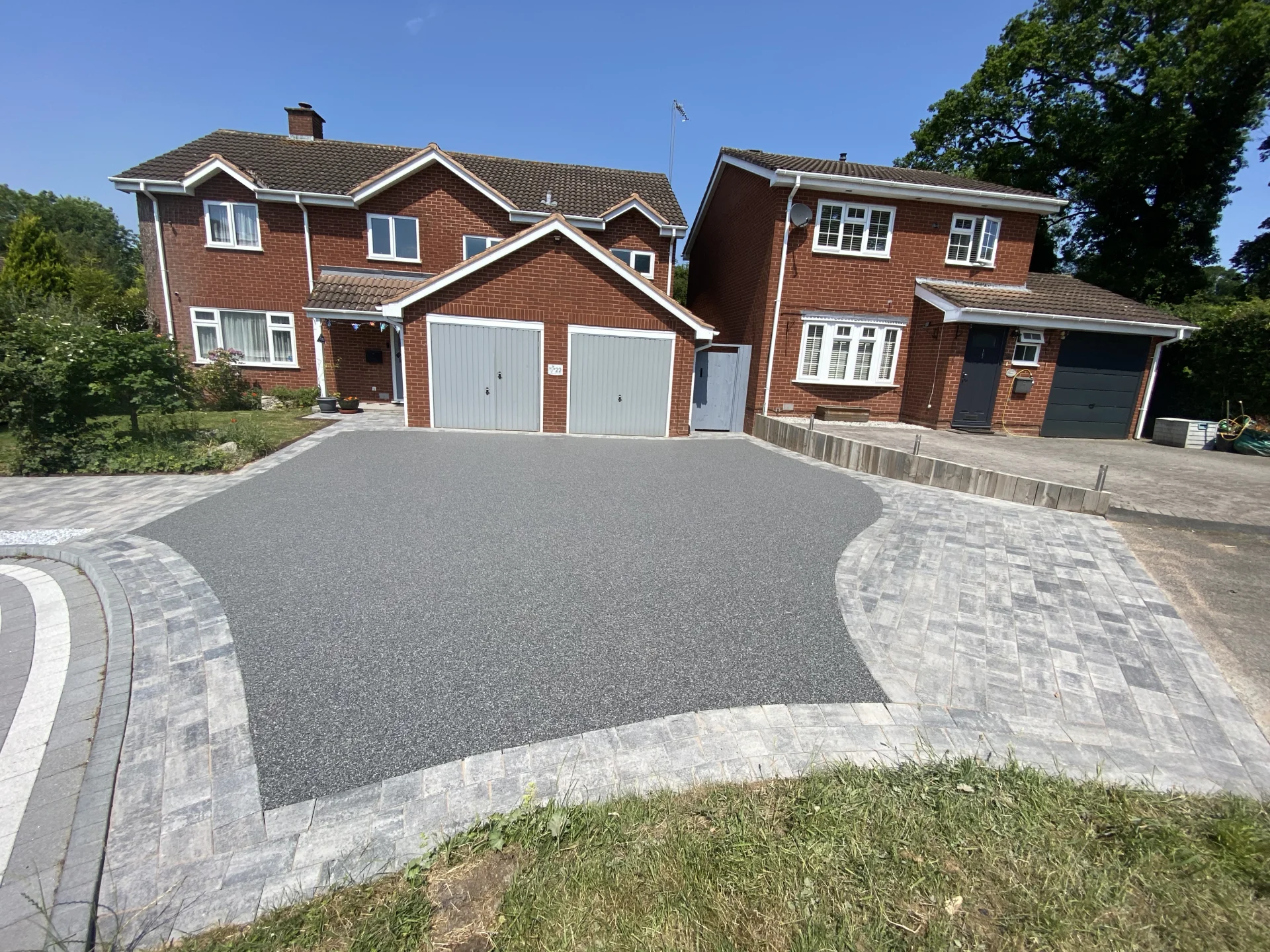
A resin bound driveway looks simple once it is down. Underneath that smooth surface sits a series of careful decisions, starting with the base and ending with the resin that holds every stone in place. When those choices are right, you get a drive that drains well and holds its colour for years. When they are wrong, cracks and patches of loose stone usually follow within a few winters.
This guide explains how resin bound surfacing works and what suits homes around Redditch, along with the questions worth asking before anyone starts digging. Our own team lays resin across Redditch and the surrounding towns, and every project begins with a free site visit on your driveway.
What resin bound surfacing actually is
Resin bound paving is a mix of natural aggregate and a clear polyurethane resin. Both are blended on site in a forced action mixer, spread across a prepared base and finished by hand with a steel trowel. Once cured, every stone is coated and locked to its neighbours, with tiny voids left between them.
Those small gaps do an important job. Rain passes straight through the surface into the layers below, so a properly built resin bound drive does not hold puddles in the way a sealed surface can.
Resin bound and resin bonded are different products
People often use the two names interchangeably. Mixing them up can lead to a quote for a cheaper system you never asked for, so here is how they differ.
| Feature | Resin bound | Resin bonded |
|---|---|---|
| How it is laid | Stone and resin mixed first, then trowelled | Resin spread on the base, loose stone scattered on top |
| Finish | Smooth and level | Rough texture, similar to gravel |
| Drainage | Permeable, water drains through | Not permeable, water runs off |
| Loose stones | None once cured | Some stones can work free over time |
| Best suited to | Driveways, paths, patios and pool surrounds | Very steep slopes needing extra grip |
For a family driveway in Redditch, resin bound is almost always the better fit. Bonded systems earn their place on steep access roads, though they rarely suit a domestic frontage.
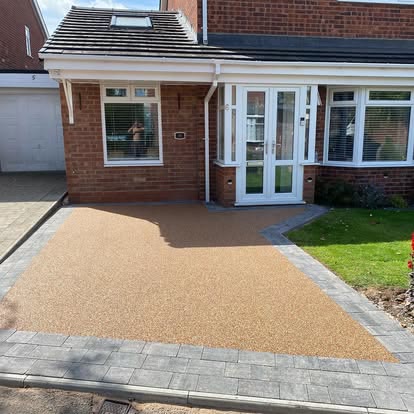
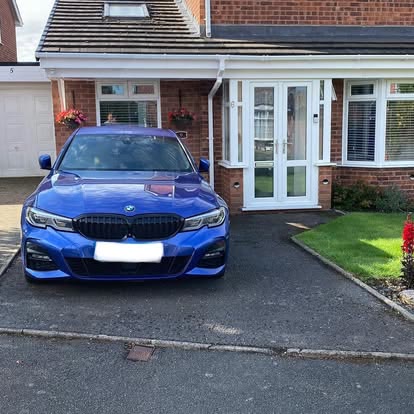
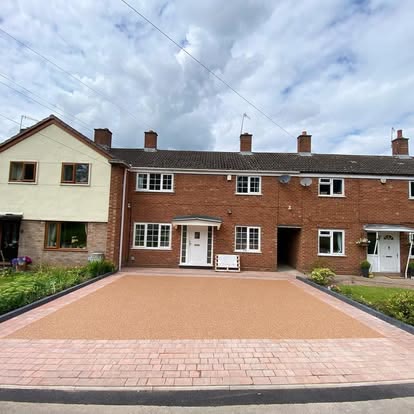
Why resin bound works well for Redditch homes
Every town has its own ground conditions, and Redditch has a few that shape how a resin surface should be built here.
Heavy clay and where the water goes
Much of Redditch and north Worcestershire sits on heavy clay. Clay holds water and drains slowly, so a permeable surface laid straight over it can leave water sitting in the sub base after a wet spell. A permeable finish still needs somewhere for that water to end up. On clay we often build in a soakaway, or connect the base to existing drainage, so the whole system keeps working through a wet winter.
Slopes in Headless Cross, Webheath and Astwood Bank
Large parts of town are hilly. Resin bound copes well with a moderate gradient, but a steep drive needs more planning. We choose an aggregate blend with good grip and fit a channel drain across the bottom wherever water would otherwise run towards a garage or front door. Anyone living up on the ridge in Astwood Bank will find this is usually the first thing we look at.
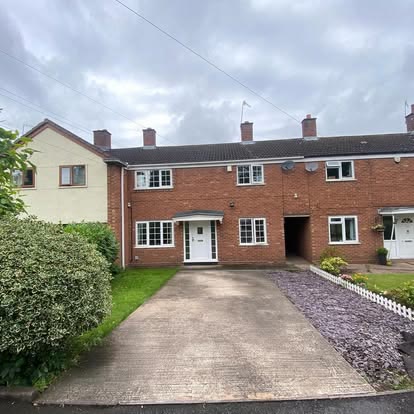
New town frontages and tired concrete
Estates such as Matchborough, Winyates and Church Hill were built with open plan frontages and plenty of poured concrete. Decades on, many of those drives are cracked or sinking. Resin can refresh them well, provided the concrete underneath is still sound. Cracks in a base tend to reappear through any thin surface laid on top, so we test the existing slab before recommending an overlay.
Where resin bound surfacing can be used
Driveways are the most common request, although resin has plenty of other uses around a home:
- Front driveways, including wide drives for two or more cars
- Garden paths, where a smooth finish helps with prams and wheelchairs
- Patios and seating areas, often alongside our bespoke patio work
- Surrounds for hot tubs and garden rooms
- Areas around mature trees, since water and air can still reach the roots
- Ramps and gentle steps, with suitable edging
How we install a resin bound driveway
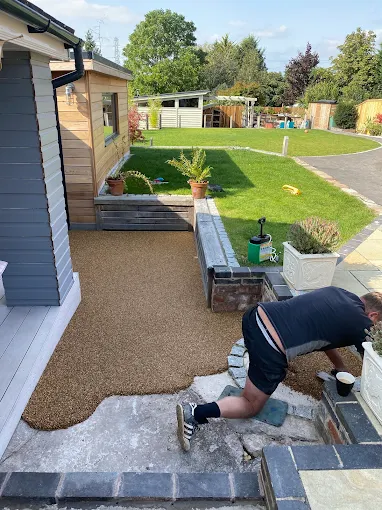
Each job starts with a free site visit. We measure up, check levels and drainage, look closely at the existing surface and talk through colours with you on your own driveway. A typical installation then follows these stages.
- Preparing the ground. Old surfaces are lifted and removed, or assessed for an overlay if they are sound enough to keep.
- Building the base. A new drive usually gets a compacted permeable sub base topped with porous asphalt or a concrete slab, chosen to suit your ground and how the drive will be used.
- Edging and drainage. Edging holds the resin in place and gives a crisp line. Channel drains and soakaways go in at this stage where needed.
- Mixing. Dry, clean aggregate is weighed and mixed with resin in small batches so every load is consistent.
- Laying and trowelling. Each batch is spread to depth and hand trowelled, usually around 18mm on driveways and about 15mm on footpaths.
- Curing. Walking on it is normally fine after several hours, while cars should wait a day or two depending on temperature.
Weather plays a part in all of this. Resin cannot go down in rain or onto a damp base, and cold air slows curing considerably, so installation days are planned around the forecast.
What we check before laying over an existing surface
Overlaying a sound tarmac or concrete drive can save a lot of excavation. Before agreeing to it, we look for these warning signs:
- Cracks wider than a hairline, or cracks that are still moving
- Areas that have sunk, or that rock underfoot
- Tarmac that has gone soft or crumbly
- Levels that send water towards the house
- A base that is itself not permeable, which affects drainage rules
If any of those apply, a new base is usually the better long term choice, even though it costs more on the day.
Choosing your colour and aggregate
Colour is where most people start, and it deserves time. Resin comes in two main types. Aliphatic resin is UV stable and keeps the finish from yellowing in sunlight, while aromatic resin costs less and can discolour over the years, especially on paler blends. Ask any installer which type they plan to use.
| Blend tone | Looks best with | Worth knowing |
|---|---|---|
| Warm golds and buffs | Red brick homes and period cottages | Hides dust well and feels soft and natural |
| Silver and grey granite | Modern render with grey window frames | A clean, contemporary look that suits new builds |
| Charcoal and black | Crisp modern frontages and dark cladding | Strong contrast, though pale dust and leaves show up |
| Mixed natural blends | Almost any property | Very forgiving on a busy family drive |
Stone size changes the look as well. A 1 to 3mm blend gives a fine, tight finish suited to paths and patios. Driveways more often use a 2 to 5mm blend with a little more texture. Seeing samples in daylight against your own brickwork is the most reliable way to choose, since colours on a screen rarely match.
Resin bound compared with other driveway surfaces
Resin is one of several good options, and it is not right for every home. This comparison covers the other surfaces we lay.
| Surface | Drainage | Upkeep | Look |
|---|---|---|---|
| Resin bound | Permeable on the right base | Occasional sweep and wash | Seamless finish in many colours |
| Block paving | Permeable versions available | Joints may need weeding and re-sanding | Patterned and traditional, repairable in sections |
| Tarmac | Usually needs drainage planned in | Very low once settled | Plain and practical, often edged with blocks |
| Loose gravel | Naturally free draining | Regular raking and topping up | Rustic, though stones tend to travel |
If you like a patterned finish, our guide to block paving driveways covers laying patterns and edging. Larger drives on a tighter budget suit a tarmac surface, and a resin border can lift its appearance.
Planning permission and dropped kerbs
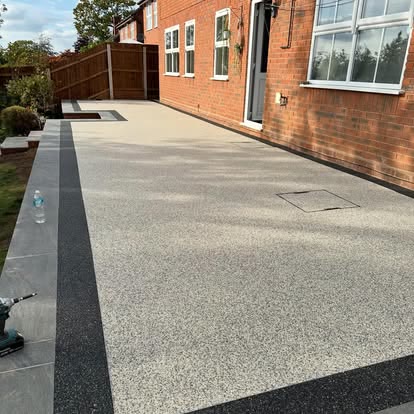
In England, paving over more than five square metres of a front garden needs planning permission unless the surface is permeable, or rainwater is directed onto a lawn or border within your property. A resin bound driveway on a permeable base meets that requirement, which explains much of its popularity for front gardens. You can read the government guidance on permeable front gardens for the full detail.
Laying resin over an existing sealed base changes things, because water can no longer drain down through the layers. In that situation we plan drainage so the finished drive still sends water to the right place. Planning questions in Redditch go to Redditch Borough Council.
A new dropped kerb is a separate matter and needs approval from the highway authority. For Redditch and towns such as Bromsgrove that means Worcestershire County Council, while homes in Studley, just over the county border, apply to Warwickshire County Council. We are happy to explain how the application works when we visit.
Looking after a resin bound surface
Resin needs very little attention, and a few habits keep it looking sharp.
- Sweep leaves and grit off regularly, especially under trees, so moss has nothing to grow in
- Wash it gently once or twice a year, holding a pressure washer lance well back from the surface
- Clean up oil or fuel spills promptly, since solvents can soften resin
- Clear snow with a plastic shovel, and feel free to use a little de-icing salt
- Avoid dragging skips or metal stands straight across the surface
Weeds very rarely root through a properly laid resin bound surface. Any that do appear tend to start in debris sitting on top, which regular sweeping prevents.
Related work we can do at the same time
Many resin projects grow once the old drive comes up. Alongside the resin itself, we can take care of:
- Soakaways and channel drains to manage water on clay soil
- Low retaining walls and steps for sloping frontages
- Block or kerb edging to frame the resin
- New planting borders and turf to finish the front garden
Resin driveway specialists in Redditch
Resin bound surfacing is our speciality. We are a family run business based on Greenlands Ave in Redditch, with a combined 40 years of hands on experience in the industry. Our own team carries out every job, so the people who measure up belong to the same business that lays your driveway.
- Free site visits with straightforward advice on whether resin suits your property
- Written 10 year guarantee on resin bound installations laid on an approved base
- Bases designed for local clay and sloping plots, with drainage planned from the start
- Full public liability insurance covered up to £2,000,000
- Clear guidance on resin type and blend, so lighter colours stay true
- A local team that is never far away if you have a question later
Superb workmanship, experts in resin. Highly recommended local firm.
Pristine Groundworks Ltd have just finished our new resin drive, and what a fantastic result - I can’t stop looking at it!
Our work covers the whole of Redditch and reaches into neighbouring towns such as Alvechurch and Droitwich Spa, where larger plots and period homes often suit warmer resin blends.
Resin bound surfacing FAQs
Is a resin bound driveway strong enough for cars?
Yes, when it is laid on a suitable base at the right depth. Driveways usually get around 18mm of resin bound aggregate over porous asphalt or concrete, which handles everyday family cars comfortably.
Can resin be laid over my existing driveway?
Often it can, if the current tarmac or concrete is sound and level, with no moving cracks. We assess the existing surface during the free site visit and tell you plainly if a new base would serve you better.
Do I need planning permission for a resin driveway?
Usually not, provided the resin sits on a permeable base so water drains through. Non permeable surfaces over five square metres in a front garden normally need permission from your local council.
Will a resin bound surface fade or turn yellow?
Aliphatic resins are UV stable and keep their colour. Aromatic resins cost less but can yellow in strong sunlight, particularly on pale blends, so it is worth confirming which type is being quoted.
How soon can I drive on a new resin driveway?
Walking on it is normally fine after several hours. Cars should wait a day or two, depending on the temperature while it cures, and we give you clear timings on the day.
Does resin bound work on a sloping drive?
It works well on moderate slopes. Steeper drives, common around Headless Cross and Astwood Bank, need an aggregate with good grip plus drainage at the bottom so water does not run towards the house.
Do weeds grow through resin bound paving?
Very rarely. Weeds struggle to root through a well laid resin bound surface. Most problems start with leaves and soil left sitting on top, so a regular sweep keeps it clear.
Can I choose a mix of colours?
Yes. Blends can be combined, and borders or simple patterns can be added in a contrasting colour. Looking at options against your brickwork in daylight makes the decision much easier.
Do you use subcontractors?
No. Our own team carries out every resin installation from start to finish.
Book a free site visit
If you are thinking about resin for a driveway or garden path, a conversation on site is the easiest next step. We will look at your ground and drainage, then talk through the options that genuinely suit your home. Call us on 07368 623683 or request your free site visit and we will arrange a time that works for you.