

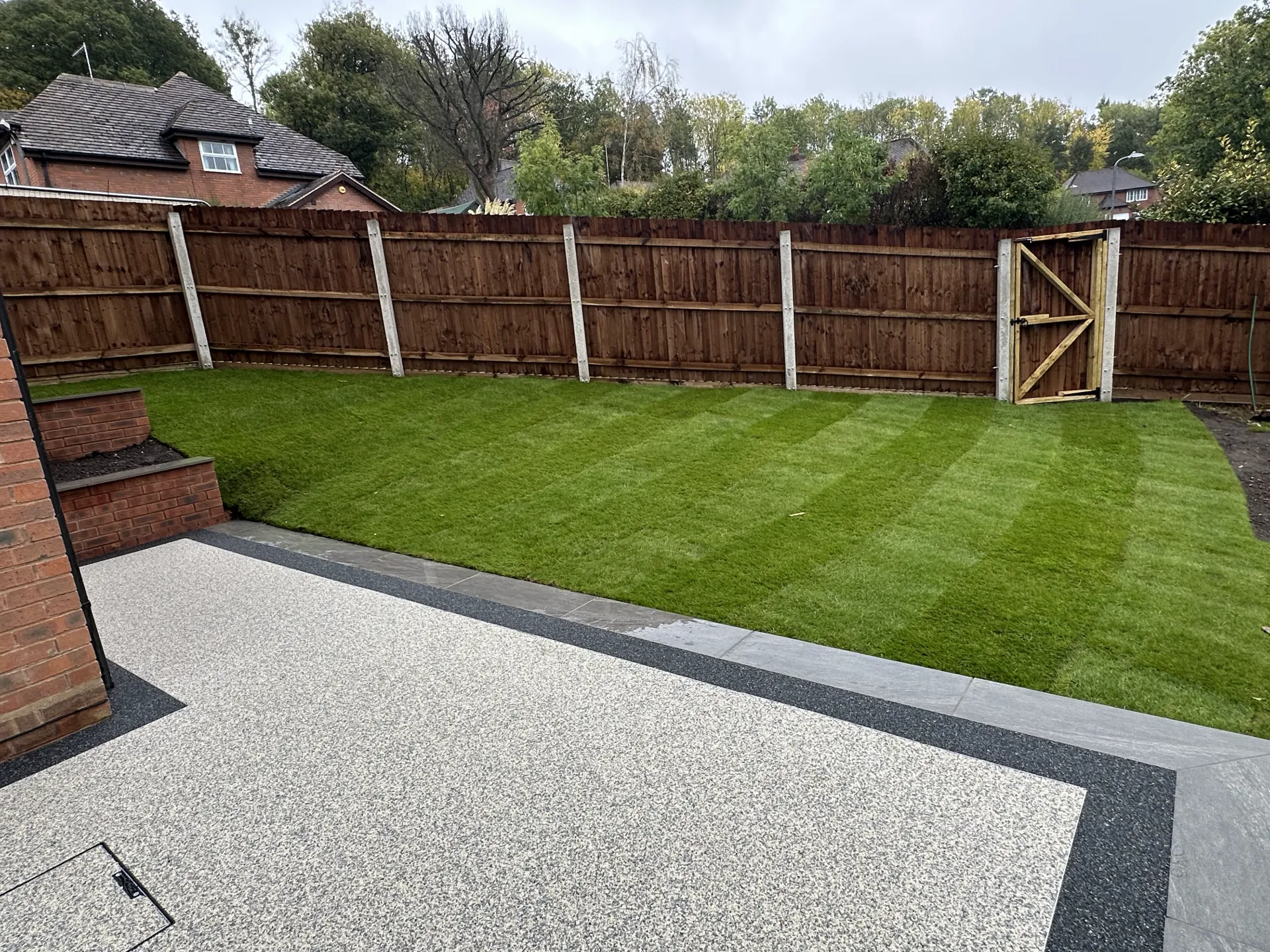
Most gardens have potential that never gets used. Think of a slope nobody walks up, or a lawn that turns to mud every winter. Landscaping is about working out what the space could do for you, then building it so it lasts. Done well, a garden feels like part of the house, somewhere you step into without thinking twice.
This guide explains how a landscaping project comes together and what to think about before work starts. It also covers how local soil and slopes shape the design. Our own team carries out landscaping across Redditch and the surrounding towns, and every project begins with a free site visit.
Hard and soft landscaping
Landscapers talk about two kinds of work. Hard landscaping covers the built structure of a garden. Soft landscaping covers everything that grows. A good design balances both, so the garden feels structured without looking stark.
| Hard landscaping | Soft landscaping |
|---|---|
| Patios and paths | Lawns and turf |
| Retaining walls and raised beds | Shrubs and perennials |
| Fencing and screening | Hedging and trees |
| Steps and level changes | Climbers and wall plants |
| Drainage and edging | Mulching and soil improvement |
Hard landscaping usually comes first, because it sets the levels and layout that planting then softens. Planning both together avoids digging up new beds to run a drain or cable later.
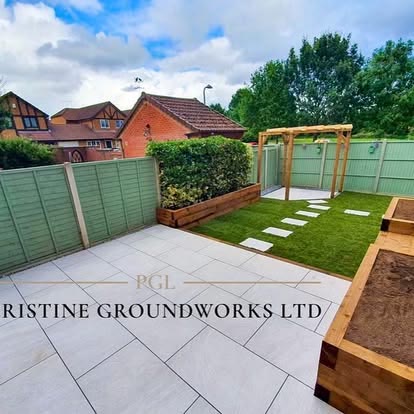
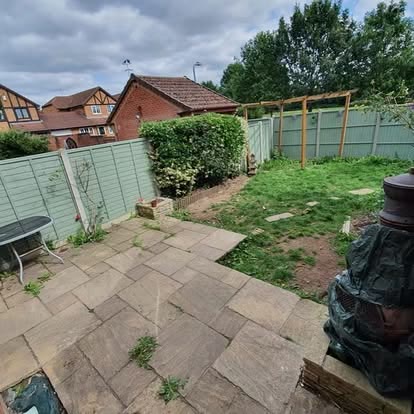
How a landscaping project comes together
Every garden is different, though most projects follow a similar path from first conversation to finished space.
- Free site visit. We walk the garden with you, look at levels and drainage, and talk about how you want to use the space.
- Layout and zones. We agree where seating, lawn and planting will go, including paths that link them.
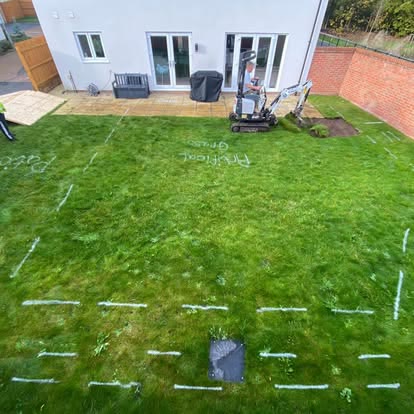
- Clearance and groundwork. Old features come out, ground is levelled and drainage goes in.
- Hard landscaping. Walls, patios, steps and edging are built to the agreed layout.
- Soil preparation. Beds are dug over and improved, and lawn areas are graded ready for turf.
- Planting and turf. New plants and lawn go in last, once the heavy work is finished.
Thinking in zones
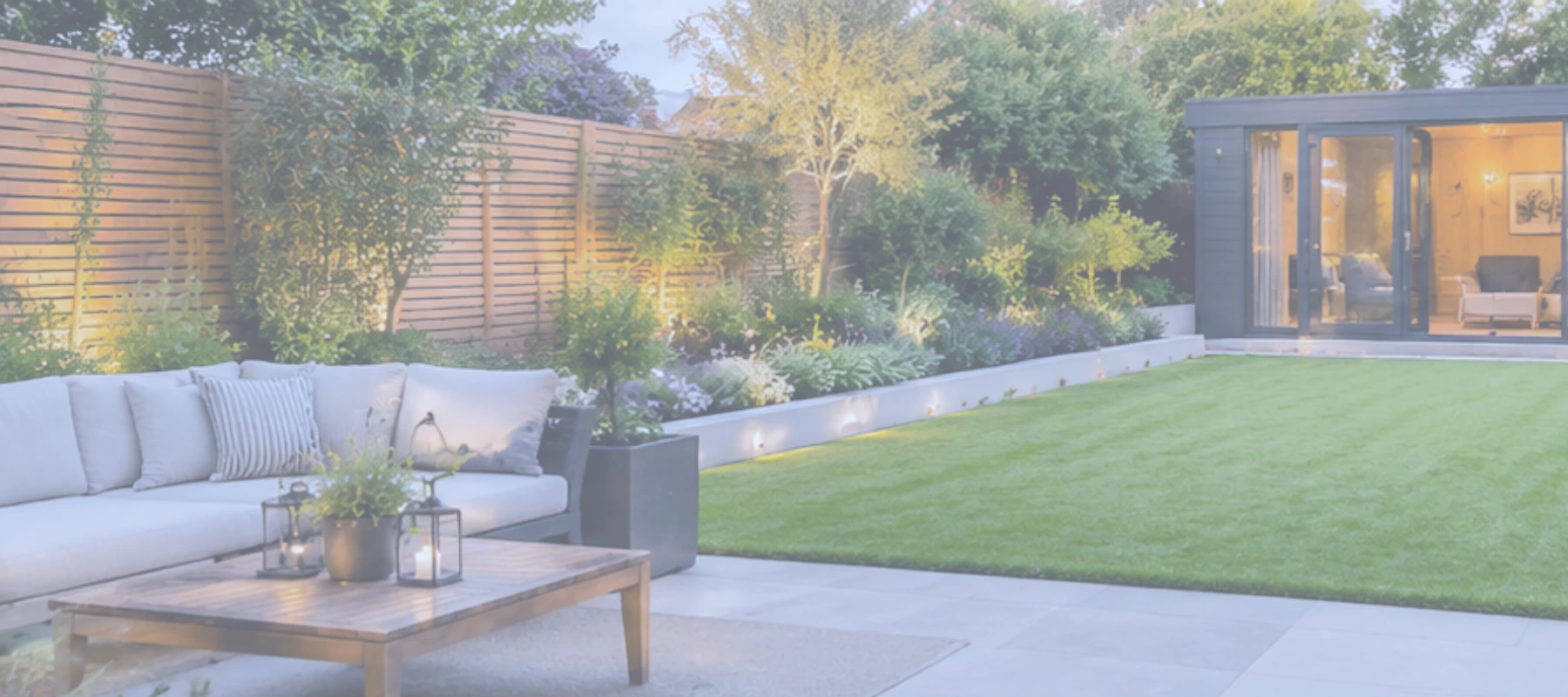
Large or small, a garden works best when each area has a purpose. Zones give structure and make even a compact plot feel bigger.
- A seating or dining area close to the house for everyday use
- An open lawn for children and pets
- Planting borders that give colour and soften fences
- A second seating spot that catches evening sun
- A practical corner for bins and compost, screened from view
Paths tie the zones together. Gentle curves feel relaxed, while straight lines suit modern homes and formal gardens.
Landscaping on Redditch soil
Ground conditions have a huge effect on how a garden performs. Redditch and its neighbouring towns bring their own challenges.
Heavy clay
Much of Redditch sits on heavy clay. It is fertile, but it drains slowly and sets hard in dry summers. Lawns on clay can stay waterlogged for weeks, and plants that dislike wet roots struggle. Improving the soil with organic matter helps a great deal, and land drains can carry water away from the worst areas.
Slopes and level changes
Hillside gardens are common across town, particularly around Webheath and up on the ridge in Astwood Bank. Terracing turns a slope into a series of flat, usable areas linked by steps. Retaining walls need proper foundations and drainage behind them, otherwise water pressure can push them over time.
New build gardens
Gardens on newer estates often hide a problem under the turf. Builders sometimes spread a thin layer of topsoil over compacted ground and leftover rubble, which leaves lawns patchy and drainage poor. Breaking up that compaction and adding proper topsoil makes a dramatic difference.
River towns and fertile valleys
Gardens in Evesham benefit from the rich soil of the Vale, which suits planting well. Homes near rivers, including parts of Droitwich Spa, can face wetter ground, so drainage often shapes the design as much as looks do.
Planting that copes with clay
Choosing plants that suit your soil saves a lot of disappointment. These are reliable performers on heavy clay in this part of the Midlands.
| Type | Good choices | Why they work |
|---|---|---|
| Shrubs | Viburnum and hydrangea | Tough roots that cope with wet winters |
| Roses | Shrub and climbing roses | Thrive in rich, moisture holding soil |
| Perennials | Hardy geraniums and astilbe | Fill borders quickly and return each year |
| Shade lovers | Hellebores and ferns | Suit north facing borders under fences |
| Grasses | Miscanthus and carex | Add movement and structure through winter |
Adding plenty of compost when beds are first dug gives any planting a much better start on clay.
Common garden problems and how we solve them
Many landscaping projects begin with a specific frustration. These are the ones we hear about most often, along with the usual fix.
| Problem | Usual cause | Typical solution |
|---|---|---|
| Lawn stays soggy all winter | Clay soil with nowhere for water to go | Land drains and soil improvement, or a hard surface instead |
| Steep slope nobody uses | Level change never dealt with | Terracing with retaining walls and steps |
| Garden feels overlooked | Low or gappy boundaries | New fencing or tall planting |
| Nowhere sunny to sit | Seating placed by habit next to the house | A second patio where the evening sun falls |
| Borders full of weeds | Bare soil left exposed | Denser planting and a thick layer of mulch |
How a French drain works
A French drain is a gravel filled trench with a perforated pipe running along the bottom. Water seeps through the gravel into the pipe, which carries it away to a soakaway or existing drain. Getting the fall of the pipe right is essential, because a drain laid flat simply fills up and stays full. On heavy clay it can rescue a lawn that has been waterlogged for years, and it is invisible once the turf goes back over the top.
Garden styles that suit local homes
Your house gives the best clue to the right style. Victorian and Edwardian terraces near the centre of Redditch often look best with cottage planting set against natural stone. Homes on the 1960s and 70s estates suit clean lines and large format paving, softened by planting that is easy to keep tidy. Newer builds frequently call for low maintenance layouts built around porcelain and artificial grass, with a few strong feature plants for interest. None of these is a rule, though matching the garden to the architecture usually makes both look better.
Lawns: real turf or artificial grass
A lawn is often the biggest single area in a garden, so the choice matters. Real turf gives a soft, natural feel and helps drainage. It needs mowing and feeding, and it can struggle in deep shade or heavy use. Artificial grass stays green all year with very little upkeep, which appeals to busy households and shaded gardens. Both need good groundwork beneath them to perform well.
Boundaries and structure
Fences and hedges frame a garden. New fencing can transform a tired plot on its own, giving privacy and a clean backdrop for planting. A well placed patio then gives the garden a natural focal point near the house.
Making a small garden work harder
Plenty of gardens around Redditch are compact, particularly on terraced streets and newer estates. Raised beds bring planting up to eye level and free the ground for seating. A single, well sized patio usually works better than several cramped areas. Light coloured paving and slim planting along the boundaries can make a narrow garden feel noticeably wider.
Before you start: a quick checklist
- Watch where the sun falls through the day, and in different seasons
- Note any areas that stay wet after rain
- Decide how much time you want to spend maintaining the garden
- Think about how children and pets will use the space
- Check for drains or tree roots that could affect the layout
- Collect photos of gardens you like, even if they are very different from yours
Keeping a new garden looking good
Newly landscaped gardens need a little attention while plants and turf establish.
- Water new turf daily in dry weather for the first few weeks
- Keep off fresh turf until roots have taken hold
- Water new plants deeply, rather than little and often
- Top up mulch on borders each spring to hold moisture and suppress weeds
- Sweep patios and paths regularly to keep them clear of leaves
Other services that often form part of a project
- Garden clearance and removal of old structures
- Land drainage and French drains for waterlogged lawns
- Raised beds built from sleepers or masonry
- Real turf laying and lawn preparation
- Paths in gravel, block, stone or resin bound paving
Why choose Pristine Groundworks
We are a family run business based on Greenlands Ave in Redditch, with a combined 40 years of hands on experience in the industry. Our own team carries out every stage, from clearing the ground to laying the final turf.
- Free site visits with practical advice on layout and drainage
- Groundwork designed for local clay and sloping plots
- One team handling both hard and soft landscaping
- No subcontractors on your garden
Garden landscaping FAQs
Where do I start with redesigning my garden?
Start with how you want to use the space, then look at sun and drainage. A site visit helps turn those ideas into a layout that suits your plot.
Can you fix a waterlogged lawn?
Usually, yes. Waterlogging on clay can often be improved with land drains and better soil. In very wet areas, a patio or raised beds may be a better use of the space.
How do you deal with a sloping garden?
Terracing with retaining walls and steps turns a slope into level, usable areas. Each wall needs solid foundations and drainage behind it so it stays stable.
Should hard landscaping go in before planting?
Yes. Building walls and patios first sets the levels and avoids damaging new plants. Planting and turf go in once the heavy work is complete.
What plants grow well on clay soil?
Viburnum, hydrangea, roses and hardy geraniums all cope well with clay. Adding compost when beds are dug gives them a much better start.
Can you work on small gardens?
Yes. Compact gardens often benefit most from careful planning, since every metre counts. Clear zones and good storage can make a small plot feel much larger.
Is real turf or artificial grass better?
Real turf feels natural and helps drainage but needs regular care. Artificial grass suits shaded gardens and busy households. We can talk through both during the site visit.
Why is the lawn on my new build so patchy?
New build gardens often have thin topsoil over compacted ground. Breaking up the compaction and adding quality topsoil before turfing usually solves it.
Do you use your own team?
Yes. Every landscaping project is carried out by our own team from start to finish.
Book a free site visit
If your garden is not working for you, a walk round together is the best first step. We will look at the space as it is now and talk through what it could become. Call 07368 623683 or book your free site visit.