

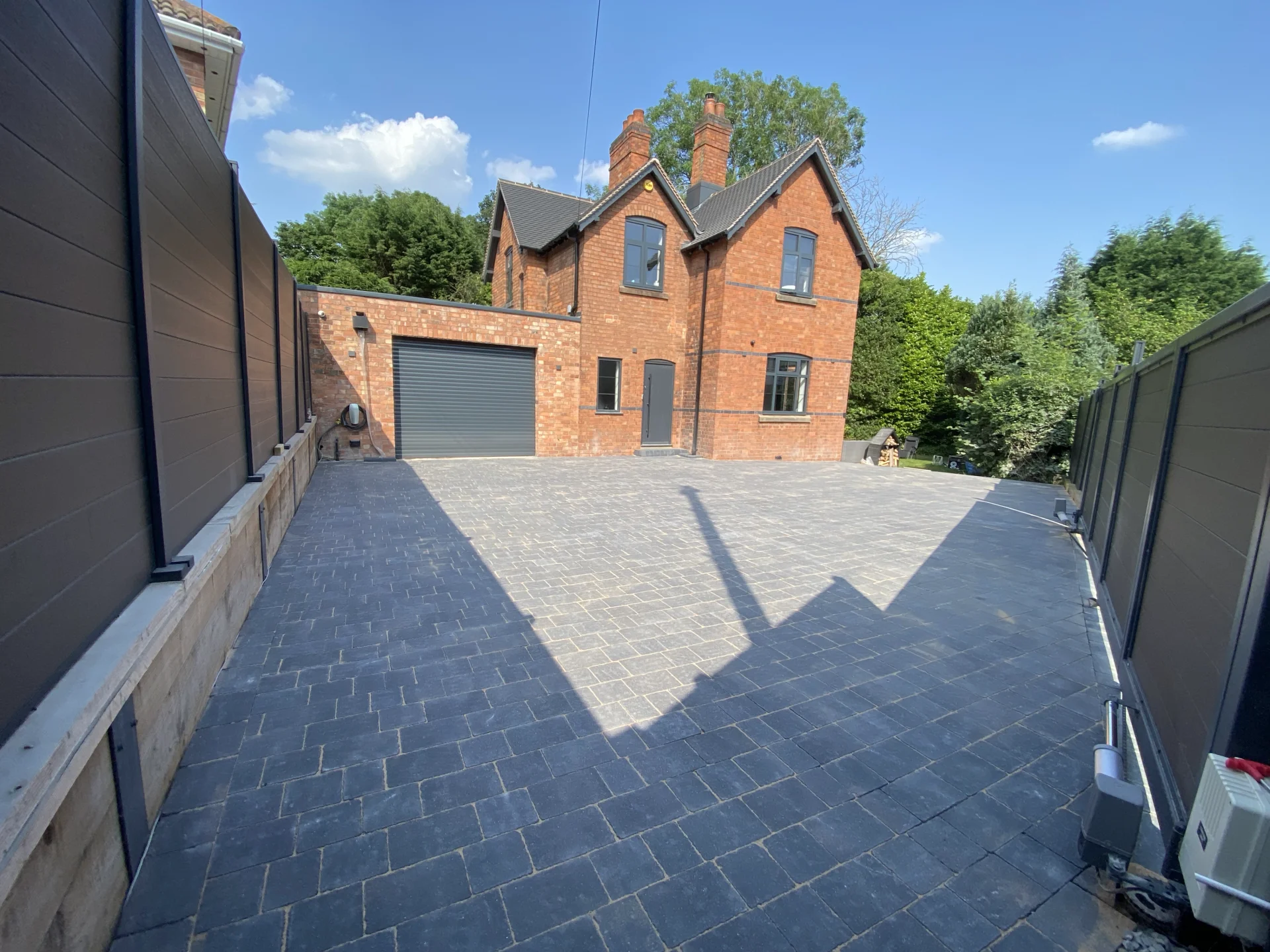
Block paving has stayed popular on British driveways for good reasons. It is strong and comes in enough colours and patterns to suit almost any house, and a damaged area can be repaired one block at a time. A block paved drive that has been laid properly can still look crisp decades later. One laid on a thin base soon develops ruts where the car tyres sit, with weeds creeping into every joint.
This guide covers how block paving is laid and which patterns suit driveways. It also explains what separates a drive that stays flat from one that sinks. Our own team lays block paving across Redditch and the surrounding towns, starting every project with a free site visit.
What block paving is made from
Most driveway blocks are concrete, made in moulds and pressed to a consistent size. Clay pavers are fired like bricks and keep their colour very well, which makes them a favourite for period homes. Both are laid tight together on a bed of sand, with fine sand brushed into the joints so the blocks lock against each other.
| Feature | Concrete blocks | Clay pavers |
|---|---|---|
| Colour range | Very wide, including greys and tumbled effects | Natural reds and dark blends |
| Colour over time | Can soften and fade slightly | Holds its colour for many years |
| Character | Crisp modern or aged and tumbled | Traditional, suits older brickwork |
| Thickness for driveways | Usually 60mm or more | Usually 50mm or more, laid for vehicle use |
Thickness matters on a driveway. Thin 50mm concrete blocks are fine for patios and paths, while drives carrying cars normally use 60mm blocks or thicker so they resist cracking and movement.
Laying patterns and why they matter
Pattern affects strength as well as looks. Some layouts spread the load from turning tyres far better than others, which affects how a drive holds up over years of use.
| Pattern | Strength under cars | Look |
|---|---|---|
| Herringbone at 45 or 90 degrees | Excellent, blocks interlock in every direction | Classic and busy, very popular on drives |
| Stretcher bond | Good when laid across the direction of traffic | Clean, brick style rows |
| Basketweave | Weaker under turning cars | Decorative, better suited to paths and patios |
| Random multi size blocks | Good when laid on a strong base | Relaxed, cobbled feel for cottages and period homes |
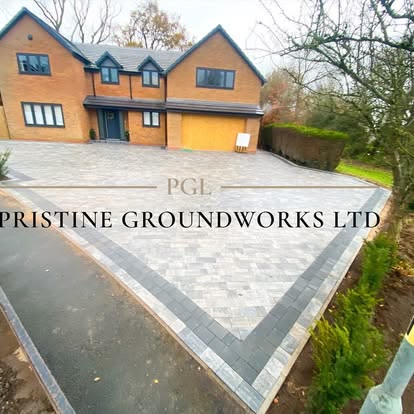
Herringbone is the usual recommendation for driveways because each block is locked in by several neighbours. Borders and soldier courses, where blocks run in a line along the edge, add definition and help hold the field of paving in place.
How we lay a block paved driveway
A free site visit comes first. We measure the area, check levels and talk through patterns and colours with you at the property. From there the work follows a clear sequence.
- Excavation. Old surfaces and soft ground come out, typically to a depth of around 200 to 250mm depending on your soil.
- Sub base. Crushed stone is spread and compacted in layers to form a solid foundation around 150mm deep.
- Edge restraints. Kerbs or edging blocks are bedded in concrete. Without them, the paving would slowly spread outwards.
- Laying course. A layer of sharp sand is screeded to an even depth, ready for the blocks.
- Laying the blocks. Blocks go down in your chosen pattern, with cuts made neatly at the edges and around covers.
- Compaction and jointing. A plate compactor beds the blocks in, then kiln dried sand is brushed into the joints and compacted again.
That final jointing step is what turns individual blocks into a locked surface. Sand is topped up over the first few weeks as it settles into the gaps.
Permeable block paving
Standard block paving sheds most rainwater off its surface. Permeable block paving works differently. Blocks are laid with slightly wider joints filled with fine grit, on a sub base of open graded stone that holds water and lets it soak away slowly.
This matters for front gardens. In England, paving more than five square metres of a front garden with a non permeable surface needs planning permission unless rainwater is directed onto a lawn or into drainage within your property. Permeable block paving meets that requirement on its own, which makes it a straightforward choice for many frontages. You can read the government guidance on permeable front gardens for the full detail.
On heavy clay, common across Redditch, a permeable system still needs somewhere for collected water to go. We often add a soakaway or connect the base to existing drainage so the system keeps working after long spells of rain.
Block paving around Redditch and nearby towns
Different parts of the area bring different requirements, and the right design changes with them.
Replacing tired new town concrete
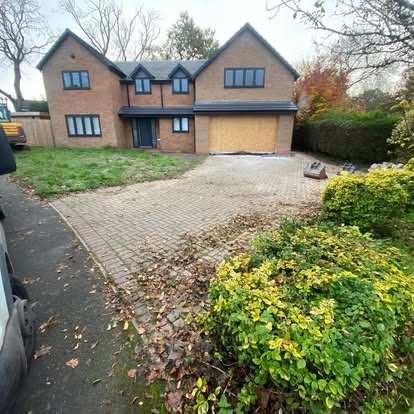
Plenty of homes in Matchborough and Winyates still have original concrete drives that have cracked and sunk over the years. Block paving is a popular replacement because it can be laid in sections around existing paths and covers, and because a wider drive can be created at the same time.
Period homes and conservation areas
In historic centres such as Henley-in-Arden and Alcester, clay pavers or tumbled concrete blocks sit far more comfortably next to old brick and timber. Where a property lies in a conservation area, it is worth checking with the council before changing a frontage.
Larger drives with turning space
Homes on bigger plots, common around Barnt Green, often suit a broad herringbone drive with a contrasting border and a turning area. Block paving handles those generous layouts well and lets you mark out parking bays or paths in a different tone.
Choosing colours that suit your home
Colour choice has a bigger effect on the finished look than most people expect. A few points help narrow the options:
- Match warm red or brindle blocks to red brick houses for a soft, traditional finish
- Pair charcoal or silver blocks with grey render and modern doors
- Use a darker border around a lighter field of paving to frame the drive
- Choose a mixed blend if you want to hide tyre marks and everyday dirt
- Look at samples outside in daylight, next to your brickwork, before deciding
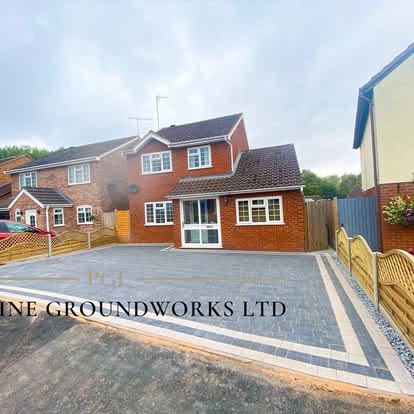
Block paving compared with other surfaces
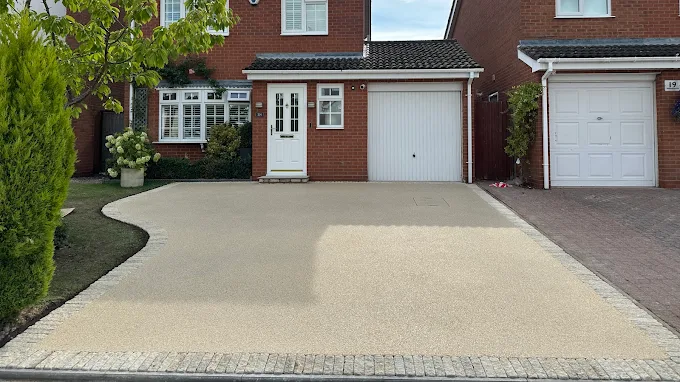
Block paving suits many homes, but it is worth weighing up against the alternatives. A resin bound driveway gives a smooth, seamless finish with no joints to weed. Tarmac is often the practical choice for very large or long drives. Block paving sits between the two, offering pattern and texture with the big advantage that damaged areas can be lifted and relaid without replacing the whole drive.
Keeping block paving looking good
Block paving is hard wearing, and a little regular care keeps it sharp.
- Sweep regularly so soil and leaves do not settle into the joints
- Pull out any weeds early, before their roots loosen the sand
- Top up kiln dried sand in the joints if it washes out
- Treat oil drips quickly with a suitable cleaner
- Consider a sealer to stabilise joint sand and resist stains
A white bloom sometimes appears on new concrete blocks in their first months. This is efflorescence, caused by natural salts rising to the surface, and it fades with normal weathering.
Signs a block paved drive needs attention
- Dips forming where car tyres usually sit
- Blocks rocking or moving underfoot
- Edges spreading outwards, opening gaps along the sides
- Water pooling in the same place after every shower
Most of these point to a weak sub base or missing edge restraints. Small areas can often be lifted and relaid on a rebuilt base using the original blocks.
Questions worth asking any installer
Quotes for block paving can look similar on paper while describing very different jobs. These questions help you compare like with like:
- How deep will the sub base be, and will it be compacted in layers?
- What edge restraints will hold the paving, and will they be set in concrete?
- How thick are the blocks you are quoting for a driveway?
- Where will rainwater go, and does the design meet the front garden planning rule?
- Who will actually carry out the work on site?
A clear answer to each one tells you a lot about how the drive will perform in ten years' time. If an installer cannot explain where the water goes, that alone is worth noting.
Related work we can carry out
Block paving projects often grow once the old surface comes up. Alongside the drive, we can take care of:
- Paths and patios in matching or complementary blocks
- Soakaways and channel drains for clay soil and sloping drives
- Low walls and steps
- Repairs and relaying of existing block paving
Why choose Pristine Groundworks
We are a family run business based on Greenlands Ave in Redditch, with a combined 40 years of hands on experience in the industry. Every block paving job is carried out by our own team.
- Free site visits with straightforward advice on patterns and drainage
- Written 3 year guarantee on block paving installations, confirmed on your quotation
- Sub bases and edge restraints built for local clay soil
- Full public liability insurance covered up to £2,000,000
- A local team that is easy to reach after the job is done
Block paving FAQs
How thick should driveway blocks be?
For drives carrying cars, 60mm concrete blocks or thicker are the usual choice. Thinner 50mm blocks are better kept for paths and patios that only take foot traffic.
Which pattern is strongest for a driveway?
Herringbone, laid at 45 or 90 degrees. Each block interlocks with several others, which spreads the load from turning tyres and keeps the surface stable.
Why do some block paved drives sink?
Sinking nearly always comes from a thin or poorly compacted sub base. Missing edge restraints make it worse, because the blocks can creep outwards and open up the joints.
Do I need planning permission for block paving?
Not if you use permeable block paving, or direct rainwater onto a permeable area within your property. Non permeable front gardens over five square metres without that drainage need permission.
How do I stop weeds growing between the blocks?
Keep the joints full of sand and sweep regularly so soil cannot settle in them. A joint stabilising sealer can also help on older drives.
Can damaged blocks be replaced?
Yes, and it is one of the main advantages of block paving. Individual blocks or small areas can be lifted and relaid without disturbing the rest of the drive.
What is the white powder on my new blocks?
That is efflorescence, a natural salt deposit common on new concrete blocks. It is harmless and normally fades within months as the surface weathers.
Can you match block paving to my house?
We can help you choose blocks that complement your brickwork and front door. Seeing samples outside in daylight is the most reliable way to judge.
Do you use subcontractors?
No. Our own team lays every block paved driveway from start to finish.
Book a free site visit
If you are planning a new block paved drive, or want an existing one put right, we would be glad to come and see it. We will check your levels and soil, then talk you through patterns and colours that suit your home. Call 07368 623683 or arrange your free site visit today.